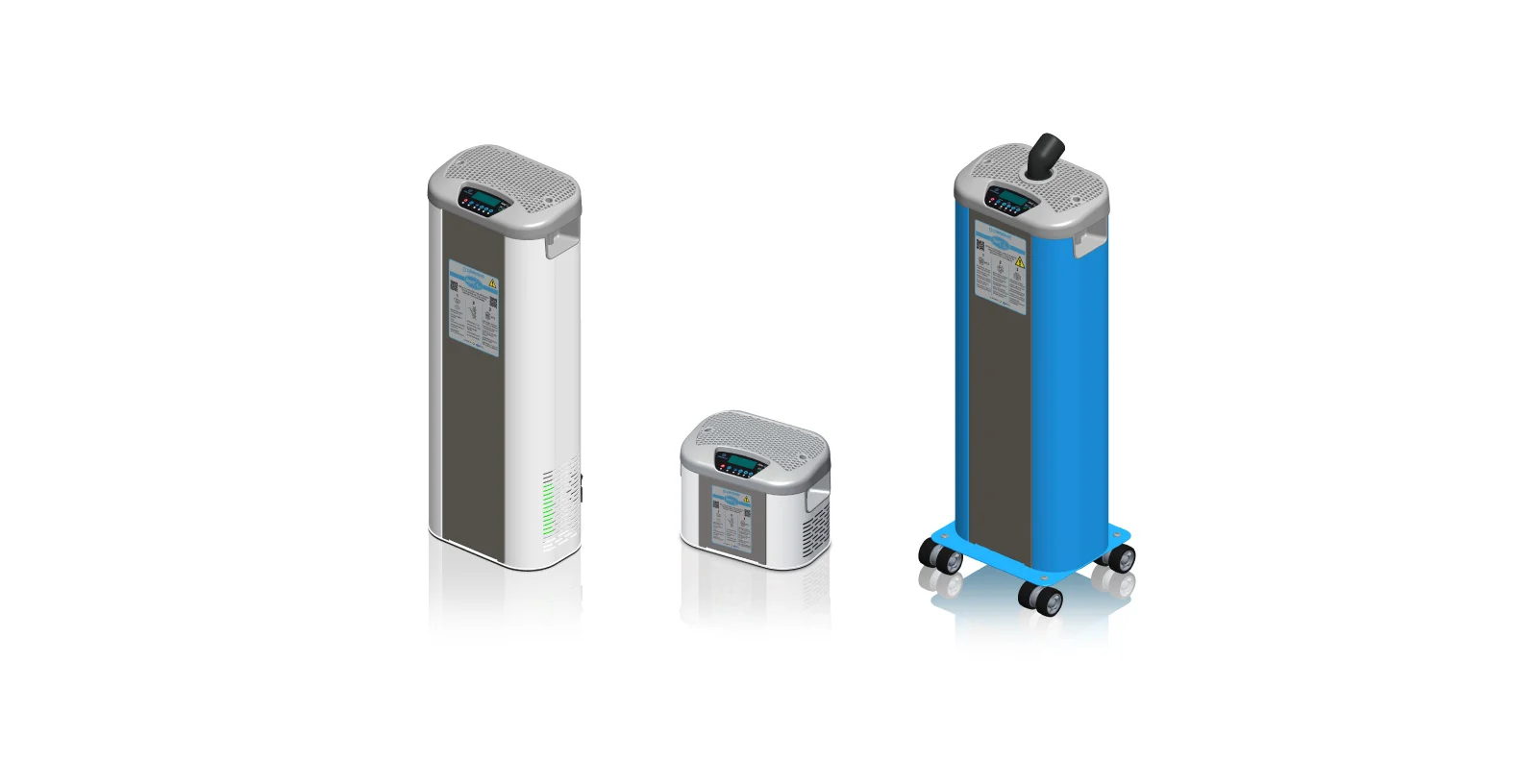
We spend most of our day indoors, where the air can be up to five times more polluted than outdoors. In business settings, understanding why air quality is essential in professional environments is the first step toward safeguarding collective well-being: clean air drastically reduces absenteeism, increases productivity, and protects workers’ health. Choosing a professional air purifier helps reduce the concentration of pathogens and indoor pollutants, thereby raising hygiene standards in the workplace.
HEPA Filter Air Purifier: How It Works and What It Removes
The heart of an efficient sanitization system lies in advanced mechanical filtration. But how exactly does an air purifier with a HEPA filter work, and what does it remove? The airflow is forced through a dense mesh of H13-certified microfibers, capable of trapping 99.97% of microscopic particles as small as 0.3 microns. This system traps fine particulate matter (PM2.5 and PM10), fungal spores, bacteria, and viruses. In Lindhaus systems, mechanical filtration works in conjunction with germicidal UV-C lamps to neutralize microorganisms before the purified air is released back into the environment.
Office Air Purifier: Reduce Allergens, Bacteria, and VOCs
Installing an office air purifier is a strategic move to capture fine dust released by printers and foot traffic, as well as harmful VOCs (volatile organic compounds) emitted by furniture and chemical cleaners, purifying the air you breathe every day.
Air Purifier for Mold and Odors: Damp Environments and Professional Kitchens
In areas subject to extreme temperature fluctuations or poor ventilation, a specialized air purifier acts as a mold-fighting solution, stopping the proliferation of spores in its tracks. In cafeterias or dining areas, an air purifier eliminates odors and quickly neutralizes fumes and lingering smells.
Best Air Purifier for Allergies: What to Consider When Choosing
To identify the best air purifier for allergies, it is essential to evaluate the combination of multiple protective stages. Key factors to consider include airflow rate relative to room volume, the efficiency of pre-filters in trapping macro-allergens such as pollen, and a low noise level to ensure the devices operate quietly and discreetly during working hours.
Lindhaus Health Line: Certified Technology for Healthcare and Hospitality Settings
Choosing Lindhaus means investing in superior technology. Our Health Line offers:
– Professional standards: Certified solutions for hospitals, clinics, hotels, and high-traffic offices.
– Multi-stage filtration: Sequential filtration levels for maximum efficiency.
– Triple technology: Synergistic action combining PM2.5 laser analysis, UV-C rays, and HEPA H13 absolute filters.
– Surface sanitization: Standalone systems to ensure comprehensive environmental safety.
– Efficiency and durability: Premium materials and industrial-grade motors that reduce maintenance costs.
Model Comparison
Lindhaus Air Purifiers
– High performance, adjusted in real time via an intelligent PM2.5 laser sensor.
– Extremely low noise level (46–49 dB), ideal for not disturbing work or rest.
– Minimal energy consumption, thanks to high-efficiency industrial motors optimized for 24-hour continuous operation.
– Exclusive, certified triple technology (Laser + UV-C + HEPA H13) and steel housing.
Other Standard Air Purifiers
– Often fixed or adjustable only through imprecise manual settings.
– Operates at maximum power, becoming a source of disturbance in rooms.
– Variable and high when non-industrial filters clog quickly.
– Simple passive mechanical filtration, almost always lacking UV-C germicidal action.
Trust in the innovation of the Lindhaus Health Line to protect your business and redefine the standard of indoor well-being with uncompromising air quality.