



Schools are among the most complex environments to manage from a professional cleaning perspective. Every day, they welcome hundreds of students, teachers, administrative staff and visitors, with a constant flow of people contributing to the build-up of dust, dirt and contaminants.
Ensuring clean environments means much more than simply maintaining a high standard of appearance. Cleanliness has a direct impact on pupils’ wellbeing, the safety of the spaces and the long-term preservation of the buildings.
For this reason, it is essential to adopt organised procedures, professional equipment and a scheduled maintenance programme.
The main challenges in cleaning school buildings
Every school comprises areas with very different characteristics.
Among the areas requiring the most attention are:
- classrooms
- corridors
- corridors
- canteens
- gyms
- laboratories
- libraries
- administrative offices
- toilets
Each area has different surfaces, materials and levels of soiling, making a specific approach necessary.
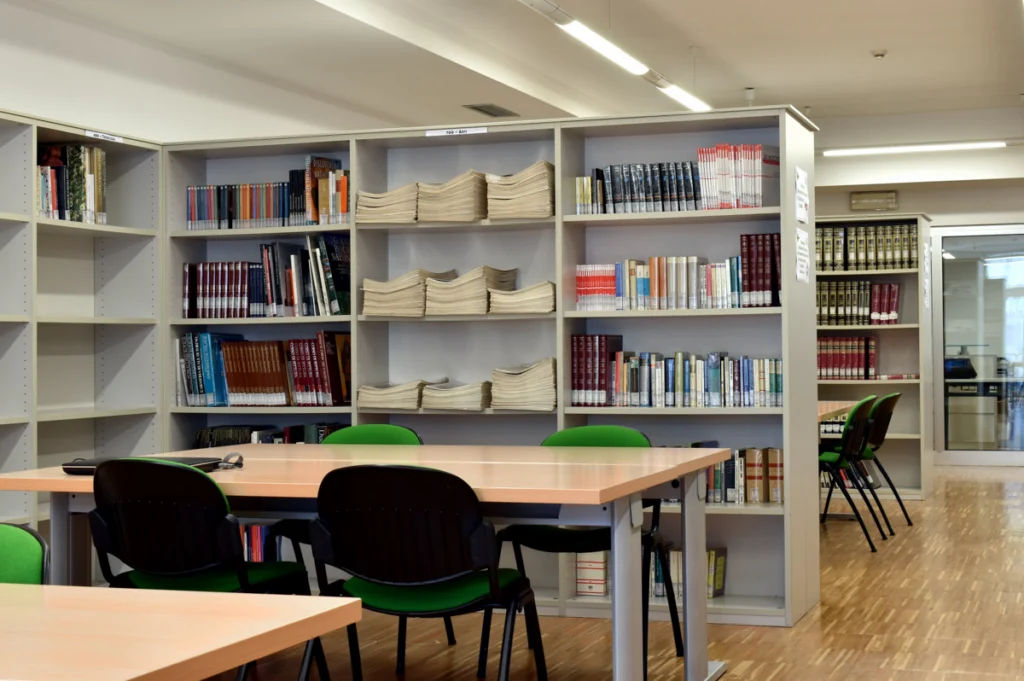
Always clean and safe floors
Floors are among the most heavily used surfaces in a school.
Every day, they accumulate:
- dust
- sand
- debris from shoes
- accidentally spilled liquids
- organic dirt
Inadequate maintenance can compromise both the appearance of the premises and the safety of pupils, increasing the risk of slips.
For this reason, it is important to use systems that wet-clean and dry the floor in a single operation, minimising downtime in these areas.
Time management is crucial
Most cleaning operations are carried out when the school is closed or during short breaks.
Cleaning contractors must therefore be able to:
- reduce cleaning times
- ensure consistent results
- minimise water and detergent consumption
- quickly make the premises ready for use again
Operational efficiency is just as essential as the quality of the cleaning.
Compact equipment for school environments
Schools are characterised by complex layouts:
- corridors
- desks
- chairs
- laboratories
- elevators
- stairs
- gyms
Machines that are too bulky can slow down staff’s work.
Compact equipment, on the other hand, makes it easy to reach even the most difficult-to-access areas, improving overall productivity.
Daily cleaning and scheduled maintenance
A school building should not be cleaned only when it appears dirty.
Scheduled maintenance enables you to:
- maintain high standards of hygiene
- preserve the floors
- reduce the need for ad hoc interventions
- extend the lifespan of surfaces
Work organisation is one of the most important factors in ensuring consistent results throughout the school year.
Air hygiene and dust removal
Air quality in school environments is an increasingly important issue.
Fine dust, allergens and airborne particles can accumulate in classrooms on a daily basis.
Proper vacuuming is the first step towards improving indoor air quality and reducing the dispersion of dust during cleaning operations.
Professional cleaning solutions for schools
The choice of equipment depends on the type of environment and the surface to be cleaned.
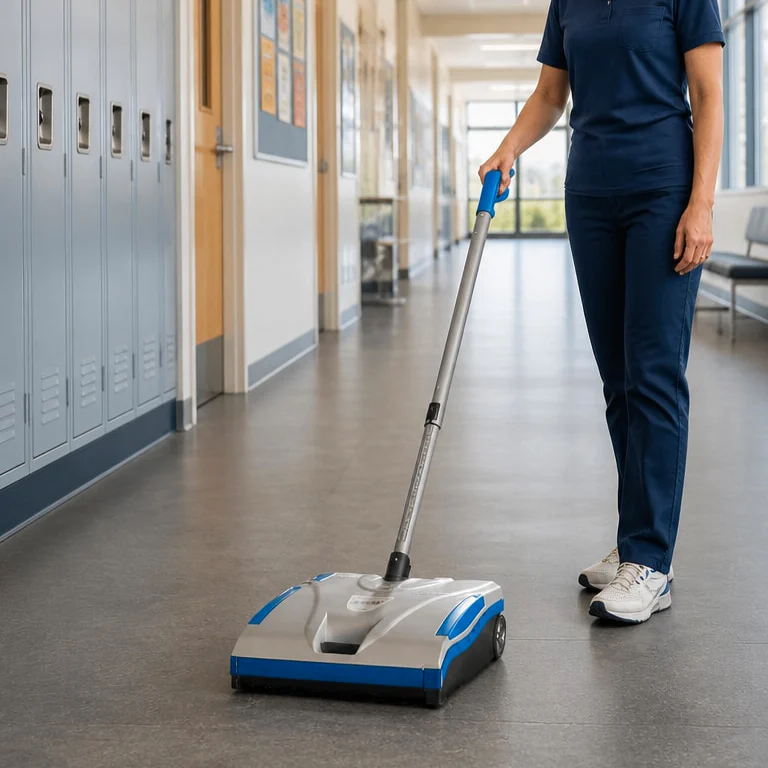
For the daily removal of dust and small debris, the LB4 Digital offers lightness, freedom of movement and ease of use – features that are particularly valued when cleaning classrooms, corridors, staircases and offices.
For floor scrubbing, the LW35 Flexy is an ideal solution for schools, kindergartens and environments with many obstacles, thanks to its extremely compact design and its ability to scrub and dry in a single pass.
For wider sufaces, such as main corridors, canteens and gyms, LW44 Flexy allows to increase the productivity maintaining low consumption of water and energy.
In areas where large quantities of dust and small debris need to be collected quickly, the LS38 combines efficient suction with maximum maneuverability, even in high-traffic environments.
Sustainability in school cleaning
Sustainability is now an increasingly important criterion in the management of public buildings.
The use of efficient professional machines enables you to:
- reduce water consumption
- limit the use of cleaning products
- reduce energy consumption
- extend the lifespan of floors
Proper maintenance also helps to reduce the need for ad hoc repairs and lower overall running costs.
The Lindhaus approach to cleaning school premises
For Lindhaus, professional cleaning in schools means creating safer, healthier and more welcoming environments for pupils, teachers and staff.
The solutions designed by the manufacturer stem from the need to combine high cleaning performance, ease of use, reliability and sustainability, enabling cleaning staff to work more efficiently even in the most complex school buildings.
Conclusion
A clean school is not only a more pleasant environment, but also makes a tangible contribution to the well-being of the people who spend their days there.
Through organised procedures, scheduled maintenance and appropriate professional equipment, it is possible to improve the quality of the environment, enhance safety and optimise cleaning times.
Investing in professional cleaning in schools means investing in the quality of the spaces dedicated to educating the next generation.