



Rough porcelain tile flooring is widely used in professional and high-traffic environments such as entrances, commercial areas, industrial kitchens, locker rooms, gyms and covered outdoor spaces. Its anti-slip properties make it safe and durable, but its surface structure also makes it one of the most difficult floors to clean correctly.
Cleaning a rough porcelain tile floor professionally requires knowledge of the material, a structured method and appropriate equipment. This approach is the foundation of Lindhaus’ professional cleaning culture.
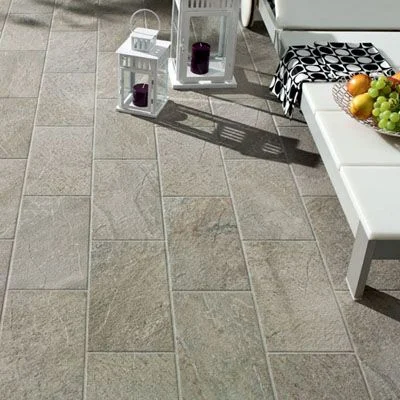
Why Rough Porcelain Tile Is More Difficult to Clean
Unlike smooth porcelain tile, rough porcelain features a porous and irregular microstructure designed to increase grip. This characteristic:
- easily retains dirt
- traps grease, fine dust and organic residues
- makes simple surface cleaning ineffective
As a result, the floor may appear “clean” but still look dull, stained or feel slippery because dirt remains embedded in the micropores.
The Most Common Mistakes When Cleaning Rough Porcelain Tile
Many issues arise from incorrect practices, often adopted for speed rather than effectiveness:
- manual washing with mops that move dirt instead of removing it
- excessive use of detergent, leaving sticky residues
- overly aggressive cleaners that dull the surface
- lack of proper rinsing or incomplete drying
Over time, these mistakes make the floor increasingly difficult to clean and less safe.
The Correct Method for Daily Cleaning
Effective cleaning of rough porcelain tile is based on one key principle: reaching into the micropores of the material and removing dirt, not just moving it around.
The correct steps are:
- Removal of Dry Dirt
Thorough vacuuming or sweeping to eliminate dust and abrasive particles - Controlled Mechanized Washing
Use water and neutral or slightly alkaline detergents specifically formulated for porcelain tile, correctly dosed. - Appropriate Mechanical Action
The brush must work deep into the rough surface without damaging it. - Immediate Recovery of Dirty Water
Essential to prevent dirt from being redistributed into the pores. - Fast Drying
To ensure anti-slip safety and visual uniformity.
The Importance of Mechanization for Rough Porcelain Tile
On anti-slip surfaces, manual cleaning is not sufficient. Mechanization allows operators to:
- apply constant pressure
- reach the most difficult areas of the surface
- vacuum up dissolved dirt effectively
- achieve repeatable and uniform results
The key is not increasing aggressiveness, but controlling mechanical action.
Cleaning Frequency and Planned Maintenance
A rough porcelain tile floor maintains its performance over time if cleaning is:
- regular, especially in high-traffic areas
- proportionate to the use of the space
- based on clear protocols, rather than occasional intensive interventions
Overly aggressive deep-cleaning operations are often the result of inadequate routine maintenance.
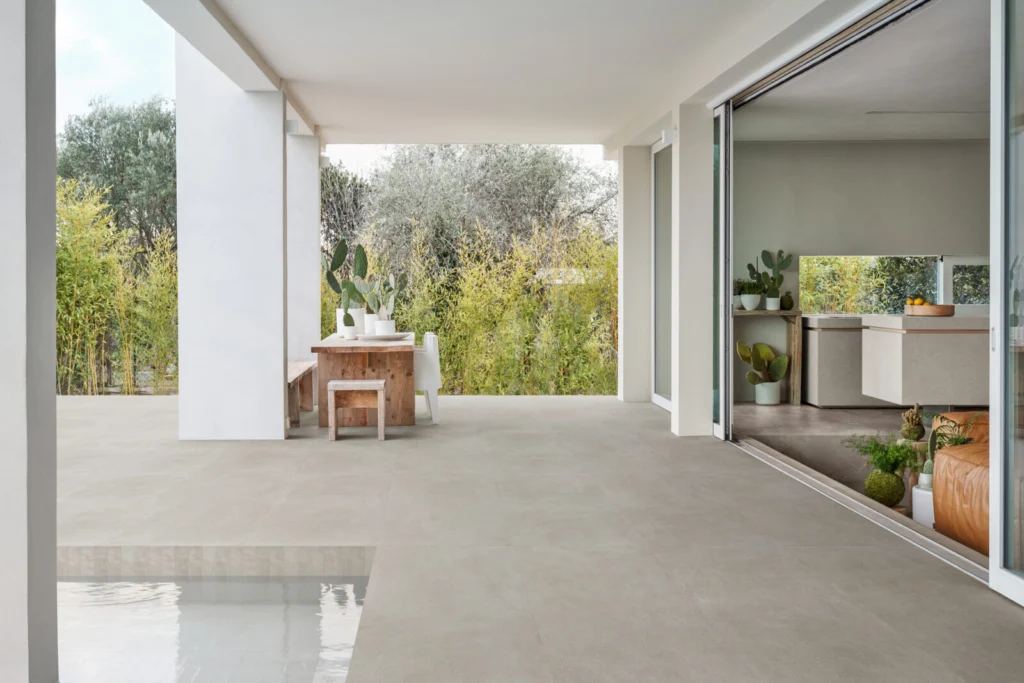
Hygiene, Safety and Perception of Spaces
Rough porcelain tile is often chosen for safety reasons, but if not cleaned correctly it can paradoxically become more slippery due to detergent residues or grease buildup.
A thoroughly cleaned floor communicates:
- real hygiene, not just visual cleanliness
- attention to safety
- professionalism in space management
This is particularly important in public-facing environments.
The Lindhaus Approach to Cleaning Anti-Slip Porcelain Tile
For Lindhaus, cleaning challenging surfaces such as rough porcelain tile means respecting the material, the context and the people who use the space.
This approach is based on:
- technical knowledge of materials
- solutions designed for critical surfaces
- attention to ergonomics and consistency of results
This vision transforms cleaning from a simple task into added value for the environment.
The most suitable Lindhaus machines for porcelain tiles are LS38 e LW44 flexy.
Conclusion
Properly cleaning a rough porcelain tile floor requires method, expertise and suitable equipment. A professional approach not only improves aesthetics, but also ensures safety, hygiene and long-term durability.
The difference lies not in the force applied, but in the cleaning culture with which the work is carried out.